
Why Apologetics?
My Journey to Becoming an Apologist


A while back, a student asked me why I was getting my doctorate in apologetics. This question stemmed from a conversation in which I mentioned that I am not all that familiar with the names of various apologists or the different viewpoints on apologetics. The question made sense in light of my statement, but it still took me by surprise as the decision to get a doctorate in apologetics makes sense to me though that decision was not easy. This post is the result of my reflecting upon this conversation, and my journey to apologetics. It has been sweet to look back and see just how much the Lord has been guiding my steps to this calling into apologetics, and it is even sweeter to see how much God has used my wife to lovingly guide me and help me realize this calling. I hope that you will enjoy it, and I hope that the Lord will use it to bless you and perhaps help you discern your own calling.

For as long as I can remember, I wanted to be a knight, but when I realized that knights didn’t really exist anymore, I wanted to go into the Army. As I grew older, I wanted to become a Green Beret sniper. There were a number of factors that influenced this dream. My father and uncle served in the Vietnam Conflict as well as in Desert Storm. My grandfather served in the Army during World War II. I also grew up watching the first three Rambo movies almost on repeat, need I say more?
When I was fifteen years old, I felt the call to ministry, but after a while, I became distracted by worldly things. The desire to go into the Army continued, and it wasn’t until a few years after my high school graduation that I realized that God was not leading me to the Army. I went to college, after some prodding from my former youth minister, and I earned a Bachelor of Science in Psychology from East Texas Baptist University (ETBU), thinking that I would eventually work for the FBI to track down serial killers. You may be picking up on a theme. I was looking for adventure, a chance to prove that I was a man and a warrior.
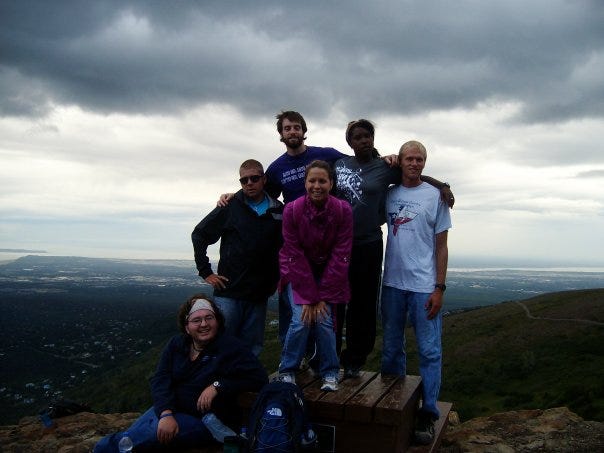
Unfortunately, this season was characterized by an unintentional running from the call to ministry. I never left the church nor was uninvolved in ministry activities. I went on short-term mission trips to places like Trinidad, Brazil, and the Dominican Republic. I went to Alaska to help train youths in leadership and ministry. I worked at a Christian summer camp for several summers during my undergrad years. However, it took me moving back home, getting married to my lovely wife, and a considerable amount of time and discussion to see that a life of ministry, of serving Christ with all that I am as the greatest adventure of them all. My wife helped me to see that I had been called to be a warrior in God’s army rather than in the United States Army.
It was during those undergrad years that I was also exposed to people like Ray Comfort and Mike Licona. I had the privilege of meeting and serving with Licona on one of those Alaska trips. Licona’s apologetical arguments for the historical Jesus and for the historical evidence for the resurrection blew my mind! These two gentlemen along with Lee Strobel’s book The Case for A Creator did a wonderful job of introducing me to the field of apologetics.

After our first year of marriage, my wife and I decided to move back to ETBU for a Master of Arts in Counseling, which I graduated with in 2017. From 2015 to 2020, I worked in a children’s unit of a mental health organization. I worked as a skills trainer with kids ranging from 3 years old to 18 years old as well as their parents. In those years, I saw a lot of hurt and trauma. I saw kids who were trying their best to overcome the abuse they had experienced, but I could tell that no matter how much they improved behaviorally through the skills training, true and complete healing was not taking place.
There was a stirring, a burning in my soul that wanted to proclaim that the answer to their deepest hurts, the salve that would heal the wounds of their souls was and is the Gospel of Jesus Christ. Many of my clients knew that I was a Christian and would ask me about my faith in some of these difficult situations.1 It was these situations with my kiddos and my desire to share the Gospel with them that the Holy Spirit began growing seeds of obedience into my heart and mind.

When you look carefully throughout the story of the Bible, God’s voice and direction is often made clearest during times of pain and suffering. God makes a covenant with Abram and Sarai after Abram laments their childlessness. Abram becomes Abraham and Sarai becomes Sarah but even still they wait 25 years for the promise to be fulfilled. Job suffers immensely and is rewarded for his faithfulness. Jonah’s sleepover in the belly of the fish for 3 days and nights, though a prophecy about Jesus’ death, burial, and resurrection, was, for Jonah, a clear revelation of God’s will for him. I want to be clear here that God does not only reveal Himself or His will to us through pain and suffering, but it happens more often than we realize. There is a reason that Romans 8:28 is such a poignant verse.2
In 2018, my family and I found out just how essential Romans 8:28 & Philippians 4:7 is to walking with the Lord faithfully through grief and suffering. I am not going to tell the whole story, but I will share with you that my youngest nephew, Austin, was killed at the young age of 18. He had been my little buddy since I was a freshman in high school. I was devastated by his loss, but in the grief, the Lord whispered to me, reminded me of the call to ministry that He had placed on my life back when I was a teen. At Austin’s graveside, I preached my first sermonette, and as hard as that was to prepare for, in actually doing it, I felt the Lord’s presence and I was comforted.

Through the help of the Holy Spirit in me, in my wife, and in a Christian counselor, I experienced healing from my grief. The Lord continued to pursue me as the thought and desire to go to seminary grew in my mind, like a budding flower slowing opening its petals. After a couple of weeks, my wife approached me with the idea/feeling that the Holy Spirit had impressed upon her that I was not supposed to be a professional counselor. I chuckled and told my wife what I had been thinking and praying about. I am thankful that the Lord provided affirmation through my wife because if it had come through anyone else, I would have just waved them off. So, my wife and I began to pray and research, and I began to seek out godly counsel from our pastor as well as former pastors and mentors. All of them encouraged me to follow this desire.
Being from Louisiana, I always envisioned going to New Orleans Baptist Theological Seminary, but God led us through various means to Midwestern Baptist Theological Seminary in Kansas City, MO. We moved here in August of 2020 after almost a year of research and prayer. This began a new and very sweet chapter in which I was pursuing a deeper knowledge of God so that I could enjoy Him more and be prepared to serve Him faithfully. What made this chapter even sweeter was that my wife was and still is going through this training with me. She focused on biblical counseling while I focused on preaching and pastoral ministry. I came to greatly enjoy systematic theology, but I also never lost my wonder in how apologetics could take science and oftentimes objections that non-Christians have against Christianity and show how those objections are actually evidence for Christianity.3

During my MDiv, I worked at a couple of different places that made me realize how important apologetics is for Christians. The first job was as a Peer Mentor at a residential facility for at-risk teens known as Shelterwood Academy. This facility was a Christian based program, and our counselors used an integrative approach to helping the residents. We were explicitly a Christian ministry and were able to share the Gospel at every opportunity. During my time as a peer mentor, I walked alongside young men who were struggling with drugs, gender identity, and same-sex attraction.
One of these young men identified as a girl. His parents, nor we, as a staff, affirmed his preferred gender identity. He compromised by allowing us to call him by the first letter of his birth name. Instead of focusing on his gender identity issue at every turn, I focused on getting to know him as a whole person. We talked about what he liked to do for fun and what he thought about different issues. We talked about his history in the church and what he understood about the Bible. Without affirming his gender dysphoria, I was able to show him how the Bible clearly says that he matters to God. I made sure to reiterate to him in every conversation, especially those where gender and homosexuality was discussed, that God loves him and that I loved him through the power of Jesus and the Holy Spirit living within me. He did not changed his mind about what he identified as, but before he left, he thanked me for loving him and for showing him that God loved him too.

The other job, which I still work at, that has shown me the importance of apologetics is at Amazon. In my almost three years at the same warehouse, I have encountered many people groups of varying faith backgrounds and even some who have no faith background. Over time, people find out that I’m a minister of the Gospel, and various other details that I have shared both in this post and in previous postings. I have had many conversations about the Gospel and the Christian faith with people from these different groups. I have not received a lot of questions that I have not considered before, but more times than not, the questions are posed in ways that I had not previously considered.
For example, one coworker asked me once why Jesus must be perfect and why God could not just forgive sins without Jesus’s death. As a seminarian and a theologian, I knew the answers to these questions, but I had never had to provide them to a non-seminarian before. I realized that these were not easy questions to answer, even though the coworker is highly intelligent, he is relatively uneducated in the realm of theology. He has researched certain aspects of Christianity, but the sources he has referenced have been very skewed and unreliable. He has asked some very good and critical questions, and I have been blessed to have some very beneficial conversations with him as well as other coworkers. These conversations are beneficial for me because they help me to grow in my faith and force me to study more carefully. These conversations have allowed me to build a rapport of love and compassion with them. These conversations are also beneficial for my coworkers because they have grown, to some degree, more open to the Christian faith than they were before.
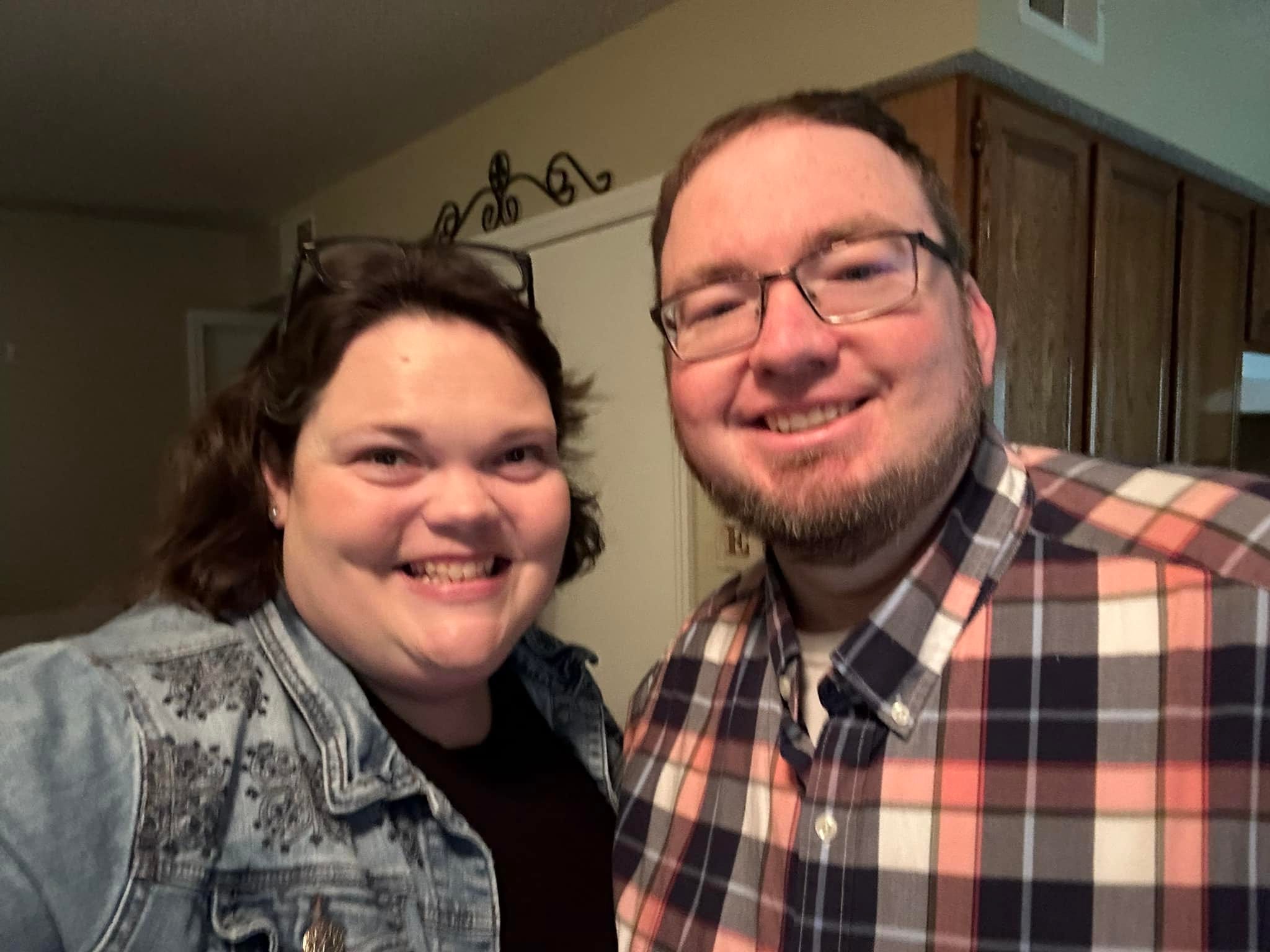
Ultimately, I owe the decision to pursuing a doctorate in apologetics to my beautiful bride. As we talked about my varied interest, I was pretty sure that I wanted to go for systematic theology, but my dear wife, who knows me so much better than I know myself most of the time, pushed me towards apologetics. She told me that apologetics is more in my wheelhouse, and what can I say, she was right. I am so blessed to have such a wise and discerning wife. I am enjoying the wide world of Christian apologetics that I get to dive into and figure out how I can best contribute to the field. I am so very grateful to God for continually using my wife to affirm and guide me as I seek to lead our family in obedience to God’s will and calling upon our lives. It is hard to believe that God is allowing us to both pursue doctorates so that we can serve Him, the church, and the lost.

There are a lot of other events that I would like to share with you, but this post has grown a bit long and I suppose it is best to save some of those things for another time. As someone who has always desired adventure and to prove myself a warrior, I lean towards apologetics because it requires one to be confident and competent in what one believes, the kind of confidence and competence in a wide range of topics that would be the equivalent of elite warriors being confident and competent in a variety of weapons and tactics. This confidence and competence also demands it be answered with confidence and competence from those that we debate.
I have also spent a good portion of my life as a counselor, and so I have an enormous amount of compassion for people. I see unregenerate hearts striving towards a concept of goodness that they will never fully understand outside of faith in Christ. I do believe that an unregenerated heart will always choose its own will rather than choosing obedience to God’s will, but I also believe in the common grace that God has graciously gifted even to unregenerated hearts to experience and even desire the good things that He has in store for us in this life. Here is my point: God has brought me through all that I’ve mentioned in this post and so much more, and I believe that He brought me through these things so that I would have this conviction that we must hold fast to the truth of God’s Word while also maintaining a spirit of graciousness and love towards the lost. This is the why I’m going into Apologetics.
It is against the American Counselor’s Association code of ethics for a counselor to initiate conversations about matters of faith because of the power dynamics within the counseling relationship. It is deemed inappropriate for a counselor to proactively share his/her faith. However, if the client initiates a conversation concerning the faith of the counselor then it is considered an open door, not to impose one’s view upon the client, but to inform the client about what the counselor believes, especially as it relates to helping the client.
I highly recommend everyone read “All Things for Good” by Thomas Watson. It is a Puritan work which means it is rich with good theology and grounded in the reality of human experience.
The most common example of this is the Problem of Evil objection. The problem of evil a very powerful objection against Christianity, but it is important to note that the problem of evil is only a problem if Christianity is true. If Christianity is not true and there is no God then there is no objective moral truth which means that there is no such thing as evil. This is not a perfect explanation but that is it in a nutshell.